That statement hit me hard. It’s like the aftershock of when you try and open a door that you absolutely know is “open” and with all confidence you grab the knob and push with your whole body just to find that you’ve slammed your face into the door because it is in fact, very much “locked” … It hit me like that.
I was in a meeting with the director of a community-based organization in Gulu who shared with me some very eye opening information and more on the harsh reality of the educational situation in northern Uganda.
When researching, you sometimes get to a point in which you can predict what a participant might say and what your results may look like. You think you know everything there is to know about your particular subject. And for me, I felt as if the majority of the people I was working with shared the same sentiments as I did about the power of community and local initiatives. In general they do, but I’ve finally found the gray area.
Right now, the gray area includes finding out that one of the local organizations that is a part of my study has been speculated of being guilty of nepotism and mismanagement of funds leading to loss of a donor and funding. As much as I believe in community I was faced with another “locked door” situation. But I wanted to address this first before getting into the topic of this post. I’m learning that there may be no formula to running a successful program/initiative- whether run by locals, foreigners, expatriates, a mixture- Locals may understand the situation better, but you find that outsiders grasp that much as well. There is still power in community and local initiatives, but I have learned not to discount those that are not.
I am grateful though. The learning never ends so I am keeping my mind, heart and more importantly EARS open.
…
Talking with the director, some very interesting information came up. He said: “Today most of the interventions are people [the youth] being trained in vocational skills and what are we talking about- carpentry, tailoring, bricklaying and concrete laying”
It doesn’t sound “bad” at first does it? To give the hope of a better future through vocation to thousands of Acholi and Langi youth who don’t have the opportunity to continue their formal education. But as I’ve learned, these vocational skills programs discriminately outnumber those providing scholarships for secondary education and disproportionally outnumber programs for university sponsorship.
So what are we looking at here? … Exactly what is being suggested- The northern community of Uganda will not be able to compete on the same level as the rest of Uganda- especially with central. The Acholi and Langi continue to remain marginalized in accessing meaningful education. When local/national political and civil positions become available who will be qualified to run for them? The carpenters and bricklayers of the north?
I would take the time to discuss the UPE an USE (universal primary/secondary education) but we all know that these two governmental initiatives to aid education in the north are “free in theory” so I shall not misuse time and talk about it.
BUT
I believe that this wouldn’t be such a dire situation if there were more scholarship programs for tertiary education and if access to all levels of education was higher in this region. Yes, things take time and reconstruction is a tedious and extensive process, but it does not mean that the best solution is to settle.
In a way everyone is caught up. Donors don’t like to fund projects that they cannot immediately see the results for. Many NGOs and CBOs receive funding for 1, 2 years and after they must search or renew for that same funding. So there is a real struggle to secure funding for 6-8 years. But with education, “long-term” funding is the name of the game. What we are seeing is organizations and initiatives catering more towards these vocational programs because they will receive funding for them AND in 1 or 2 years donors see results.
A friend put it this way: “Sponsorships don’t pay off in the short-term. You keep sending children to school, but it takes years to realize what the pay-off has been and many donors are not that patient … yet if you are really to make a long-lasting intervention that is the way to go; you’ve got to make for posterity, you’ve got to cater to the future of this region.”
This is creating a lack of human resource in northern Uganda in fields such as medicine, law, administration, politics and among all things education! I would love to see many more youth from the north be able to compete and compete favorably with their counterparts in the rest of the country. After all that has happened in and to this region and people- the bureaucracy of aid is hindering true growth …
So the question still remains “Are we condemning a whole generation in the Acholi sub-region to being carpenters and tailors?”
Comments are welcomed.
Saturday, May 29, 2010

Monday, May 24, 2010
One Day I'll Wake Up
This is not a dream. This is not a dream. This is not a dream. This is my life.
Have you ever had to tell yourself that? In good situations and in bad- that what is happening around you is actually real.
Well I’m saying it now, but for me it’s the good kind of realization. And for that I am grateful
If you’ve been reading then you know I’m living in northern Uganda- Gulu to be exact. This journey started in January and sadly it is coming to an end soon. And by soon I mean mid-July.
I looked at the calendar today and I have a little less than 8 weeks … see I know what you’re saying, “8 weeks? That’s a really long time” … and my reply would be along the lines of, “not when you’ve been here for months” … “and not when you can’t even count how many things you’ll miss between the time you leave and the time you return”
…
I ate dinner alone tonight. I met up with the crew (Erin, Dustyn, Rachel, Whitney and friends Jeff and Sam) for dinner at a traditional foot spot called Tofique- But I left to eat at Mealtime because Tofique was finished with a lot of the dishes I actually eat.
Which leads me to tell you some of the things I will miss the most:
Malakwang and sweet potatoes! traditional beans and rice, rolex, chapatti and motoke, roasted corn, the chicken. Oh the FRUIT: bananas, pineapple, mangos and apples. Yes, I can get these fruits in the States but they taste so much better here :)
I’ll miss the Gulu market, the evening sunsets, the neighbors children running up to touch my hand and occasionally walk me to the road.
I’ll miss the stars because you can see them so well versus back in Knoxville or Memphis. I’ll miss the moon which lighted the sometimes difficult path back to our house at night.
I’ll miss the landscape … the beautiful beautiful landscape. The majesty of the Nile, the vibrant green hills.
I’ll miss riding on bodas
I’ll miss traveling … to the village, to Kampala to Kitgum. I’ll miss the fresh air outside of town. I’ll miss the people- all the people I’ve met and their stories.
I’ll miss, I’ll miss, I’ll miss and keep missing until I return
However, things I will not miss: the bad roads (but I’m sure every Ugandan would say the same thing), the jeering men & extreme change in weather (hot or rainy- take your pick)
…
So as I walked back to our apartment from dinner at Mealtime I told myself, “this is quite in fact a dream- a very vivid dream” and I congratulated my conscience for crafting such a detailed and magnificent dream. The walk home made me think about how much I’ll miss the cool night and the breeze as well.
I know that for about 8 more weeks I’ll get to wake up here in my second home. A place that is so real that I think it’s a dream sometimes.
For months now, I’ve been planning how and when I’ll be coming back. I'm hoping next summer. Because I know that one day I’ll wake up …
and I won’t be in Uganda anymore.
Have you ever had to tell yourself that? In good situations and in bad- that what is happening around you is actually real.
Well I’m saying it now, but for me it’s the good kind of realization. And for that I am grateful
If you’ve been reading then you know I’m living in northern Uganda- Gulu to be exact. This journey started in January and sadly it is coming to an end soon. And by soon I mean mid-July.
I looked at the calendar today and I have a little less than 8 weeks … see I know what you’re saying, “8 weeks? That’s a really long time” … and my reply would be along the lines of, “not when you’ve been here for months” … “and not when you can’t even count how many things you’ll miss between the time you leave and the time you return”
…
I ate dinner alone tonight. I met up with the crew (Erin, Dustyn, Rachel, Whitney and friends Jeff and Sam) for dinner at a traditional foot spot called Tofique- But I left to eat at Mealtime because Tofique was finished with a lot of the dishes I actually eat.
Which leads me to tell you some of the things I will miss the most:
Malakwang and sweet potatoes! traditional beans and rice, rolex, chapatti and motoke, roasted corn, the chicken. Oh the FRUIT: bananas, pineapple, mangos and apples. Yes, I can get these fruits in the States but they taste so much better here :)
I’ll miss the Gulu market, the evening sunsets, the neighbors children running up to touch my hand and occasionally walk me to the road.
I’ll miss the stars because you can see them so well versus back in Knoxville or Memphis. I’ll miss the moon which lighted the sometimes difficult path back to our house at night.
I’ll miss the landscape … the beautiful beautiful landscape. The majesty of the Nile, the vibrant green hills.
I’ll miss riding on bodas
I’ll miss traveling … to the village, to Kampala to Kitgum. I’ll miss the fresh air outside of town. I’ll miss the people- all the people I’ve met and their stories.
I’ll miss, I’ll miss, I’ll miss and keep missing until I return
However, things I will not miss: the bad roads (but I’m sure every Ugandan would say the same thing), the jeering men & extreme change in weather (hot or rainy- take your pick)
…
So as I walked back to our apartment from dinner at Mealtime I told myself, “this is quite in fact a dream- a very vivid dream” and I congratulated my conscience for crafting such a detailed and magnificent dream. The walk home made me think about how much I’ll miss the cool night and the breeze as well.
I know that for about 8 more weeks I’ll get to wake up here in my second home. A place that is so real that I think it’s a dream sometimes.
For months now, I’ve been planning how and when I’ll be coming back. I'm hoping next summer. Because I know that one day I’ll wake up …
and I won’t be in Uganda anymore.
Wednesday, May 12, 2010
“Really All The Students Have Been Affected …
they may not have been abducted themselves, but maybe their parents were abducted. Or simply they were all forced to live in a camp. So in one way or another all the children have been abducted. All of them have something to say about peace and the need for peace”
-Educationalist for the Pincer Group International Limited.
Living is Gulu sometimes it’s hard to believe that northern Uganda was once a war-zone- The site of brutal killings and rape, mass murders and child abductions. I wish I didn’t have to start this post by recounting what was, but it’s important to note that these things did occur- That they happened and the people affected are the people I meet and talk with everyday …
Like I said it’s sometimes hard to believe. Even when I travel to districts and regions such as Amuru, Pabbo and Kitgum I know that these roads were once dangerous and impassable. Remnants of the war come in different forms: a destroyed school building here, a IDP camp there, from the physically disable who you see on a weekly basis to the mentally disturbed people moving about with no clear direction … it comes and goes through your mind and you remember the history, the stories, the lives lost and those still living with the cost of war.
I mean the “cease-fire” was in 2006 so everything is “freshly post-conflict” and yet the resilience here is inspiring and unbelievable.
But recently I was overwhelmed with what was … and sadly what still is.
I’ve been volunteering for the Acholi Education Initiative (AEI) for about a week and a half now. AEI was started in 2001 by a cross section of Acholi society in Gulu, Kampala and in the Diaspora under the auspices of the Acholi Religious Leaders Peace Initiative. Their vision is to empower war affected youth for sustainable peace and development in the country.
My first task before going out into the field was to organize and file student profiles of youth who are beneficiaries of sponsorships from the Netherlands & Irish embassy, War Child Canada and DANIDA. It seemed like an easy job. I’m not much of an office person so I was anxious to get out into the field. But as I continued removing student photos, labeling them, filing them by school name I started to notice the handwriting inside their individual folders.
Each folder contained a different style of handwriting and I discovered that they were filled out by the students themselves. There was a pattern among the files because AEI works with the most vulnerable war-affected youth (most are orphans). I scanned folder after folder in which students recounted how they lost their parents …there was malaria, AIDS and natural causes, but most of the students' parents were killed by the LRA rebels and even by the Karomojong.
For one girl, after her father was killed by the LRA her mother was murdered because her brother escaped from LRA captivity. And a young boy’s eye was removed after he attempted to escape for the first time.
No article, no report, no statistics can come close to the vivid voices of these children. Nothing can record what they themselves can write down about what happened to them and their families.
I physically felt heavy. My heart sank to my stomach. My eyes, blurry, stayed glued to the pages even though my mind instructed me to stop reading. If you were a victim of abduction there was section for that. Some were in captivity for as little as 1 week and others for as long as 1 year. These boys and girls are usually the eldest too and they all claim their younger brother and sisters as dependents.
So who is taking care of them if they are orphans? Well for those who lost one parent they are struggling with a single-parent income. And for those who lost both parents, their new caregivers range in age. But mostly they are 26 to 35 year old peasant farmers and maids and then you may have a grandparent taking care …
It was hard for me to continue filing. I had to take a few moments to breath. Their faces stuck in my mind. The eeriness of the white and black portrait shots of more than 150 students. File after file- a story to tell. It seemed like something out of a movie. But it’s the reality all around me.
The situation is dire especially since acquiring funding is extremely difficult these days. Even one of AEI’s donors has decided to withdraw their support this year citing a number of reasons, but one included that the “war is now over” … but to me, NOW is the most critical point to support CBOs like AEI. What you invest in now will set the trend for things to come since you are rebuilding from war.
These community-based and grassroots initiatives are so important to these communities and are essential to the rebuilding of the north. And I believe in community. There are so many initiatives on the brink- trying to survive on the little donations and funding that they have. They’re not yet “big names” they are not “well-established” so they get looked over for grants and funds. But I say INVEST in them! especially when there is little money to go around.
“We understand the people. It is easier to talk from the African context” – Bishop Ochola
“I’m a teacher myself and I have taught in the classroom since 2006 and I know the problems that our students here in northern Uganda are going through” -Innocent Achaye, founder of a new community initiative called Pearl Africa Education Initiative
“I told you in our selection process we involve the community members and so we have the support of the community members themselves, the local leaders and even the students are very grateful for what is going on so they are willing to cooperate with us. They are really willing. And you see here the working environment is good” – Susan Alobo, project coordinator for AEI
I am not saying that funding should be directed away from the national and foreign governmental organizations and agencies, but that there should be a preference for grassroots initiatives to the point that they don’t need to give their ideas and programs over to well-established organization and hope that it gets picked up. It’s a real struggle to see these initiatives survive off as little as 2 million UGX for 2 years and the kindness family and friends …
I hope to gather more information on this topic of CBOs in education and the power of grassroots initiatives as I further my research for my Howard H. Baker Scholar appointment in the coming weeks.
For now, I’m not sure how these initiatives will keep providing services for the community and a part of me thinks that they will not be able to in the current economic climate. But like I said, resilience is abundant here.
-Educationalist for the Pincer Group International Limited.
Living is Gulu sometimes it’s hard to believe that northern Uganda was once a war-zone- The site of brutal killings and rape, mass murders and child abductions. I wish I didn’t have to start this post by recounting what was, but it’s important to note that these things did occur- That they happened and the people affected are the people I meet and talk with everyday …
Like I said it’s sometimes hard to believe. Even when I travel to districts and regions such as Amuru, Pabbo and Kitgum I know that these roads were once dangerous and impassable. Remnants of the war come in different forms: a destroyed school building here, a IDP camp there, from the physically disable who you see on a weekly basis to the mentally disturbed people moving about with no clear direction … it comes and goes through your mind and you remember the history, the stories, the lives lost and those still living with the cost of war.
I mean the “cease-fire” was in 2006 so everything is “freshly post-conflict” and yet the resilience here is inspiring and unbelievable.
But recently I was overwhelmed with what was … and sadly what still is.
I’ve been volunteering for the Acholi Education Initiative (AEI) for about a week and a half now. AEI was started in 2001 by a cross section of Acholi society in Gulu, Kampala and in the Diaspora under the auspices of the Acholi Religious Leaders Peace Initiative. Their vision is to empower war affected youth for sustainable peace and development in the country.
My first task before going out into the field was to organize and file student profiles of youth who are beneficiaries of sponsorships from the Netherlands & Irish embassy, War Child Canada and DANIDA. It seemed like an easy job. I’m not much of an office person so I was anxious to get out into the field. But as I continued removing student photos, labeling them, filing them by school name I started to notice the handwriting inside their individual folders.
Each folder contained a different style of handwriting and I discovered that they were filled out by the students themselves. There was a pattern among the files because AEI works with the most vulnerable war-affected youth (most are orphans). I scanned folder after folder in which students recounted how they lost their parents …there was malaria, AIDS and natural causes, but most of the students' parents were killed by the LRA rebels and even by the Karomojong.
For one girl, after her father was killed by the LRA her mother was murdered because her brother escaped from LRA captivity. And a young boy’s eye was removed after he attempted to escape for the first time.
No article, no report, no statistics can come close to the vivid voices of these children. Nothing can record what they themselves can write down about what happened to them and their families.
I physically felt heavy. My heart sank to my stomach. My eyes, blurry, stayed glued to the pages even though my mind instructed me to stop reading. If you were a victim of abduction there was section for that. Some were in captivity for as little as 1 week and others for as long as 1 year. These boys and girls are usually the eldest too and they all claim their younger brother and sisters as dependents.
So who is taking care of them if they are orphans? Well for those who lost one parent they are struggling with a single-parent income. And for those who lost both parents, their new caregivers range in age. But mostly they are 26 to 35 year old peasant farmers and maids and then you may have a grandparent taking care …
It was hard for me to continue filing. I had to take a few moments to breath. Their faces stuck in my mind. The eeriness of the white and black portrait shots of more than 150 students. File after file- a story to tell. It seemed like something out of a movie. But it’s the reality all around me.
The situation is dire especially since acquiring funding is extremely difficult these days. Even one of AEI’s donors has decided to withdraw their support this year citing a number of reasons, but one included that the “war is now over” … but to me, NOW is the most critical point to support CBOs like AEI. What you invest in now will set the trend for things to come since you are rebuilding from war.
These community-based and grassroots initiatives are so important to these communities and are essential to the rebuilding of the north. And I believe in community. There are so many initiatives on the brink- trying to survive on the little donations and funding that they have. They’re not yet “big names” they are not “well-established” so they get looked over for grants and funds. But I say INVEST in them! especially when there is little money to go around.
“We understand the people. It is easier to talk from the African context” – Bishop Ochola
“I’m a teacher myself and I have taught in the classroom since 2006 and I know the problems that our students here in northern Uganda are going through” -Innocent Achaye, founder of a new community initiative called Pearl Africa Education Initiative
“I told you in our selection process we involve the community members and so we have the support of the community members themselves, the local leaders and even the students are very grateful for what is going on so they are willing to cooperate with us. They are really willing. And you see here the working environment is good” – Susan Alobo, project coordinator for AEI
I am not saying that funding should be directed away from the national and foreign governmental organizations and agencies, but that there should be a preference for grassroots initiatives to the point that they don’t need to give their ideas and programs over to well-established organization and hope that it gets picked up. It’s a real struggle to see these initiatives survive off as little as 2 million UGX for 2 years and the kindness family and friends …
I hope to gather more information on this topic of CBOs in education and the power of grassroots initiatives as I further my research for my Howard H. Baker Scholar appointment in the coming weeks.
For now, I’m not sure how these initiatives will keep providing services for the community and a part of me thinks that they will not be able to in the current economic climate. But like I said, resilience is abundant here.
Saturday, May 8, 2010
Acholi Dance Festival
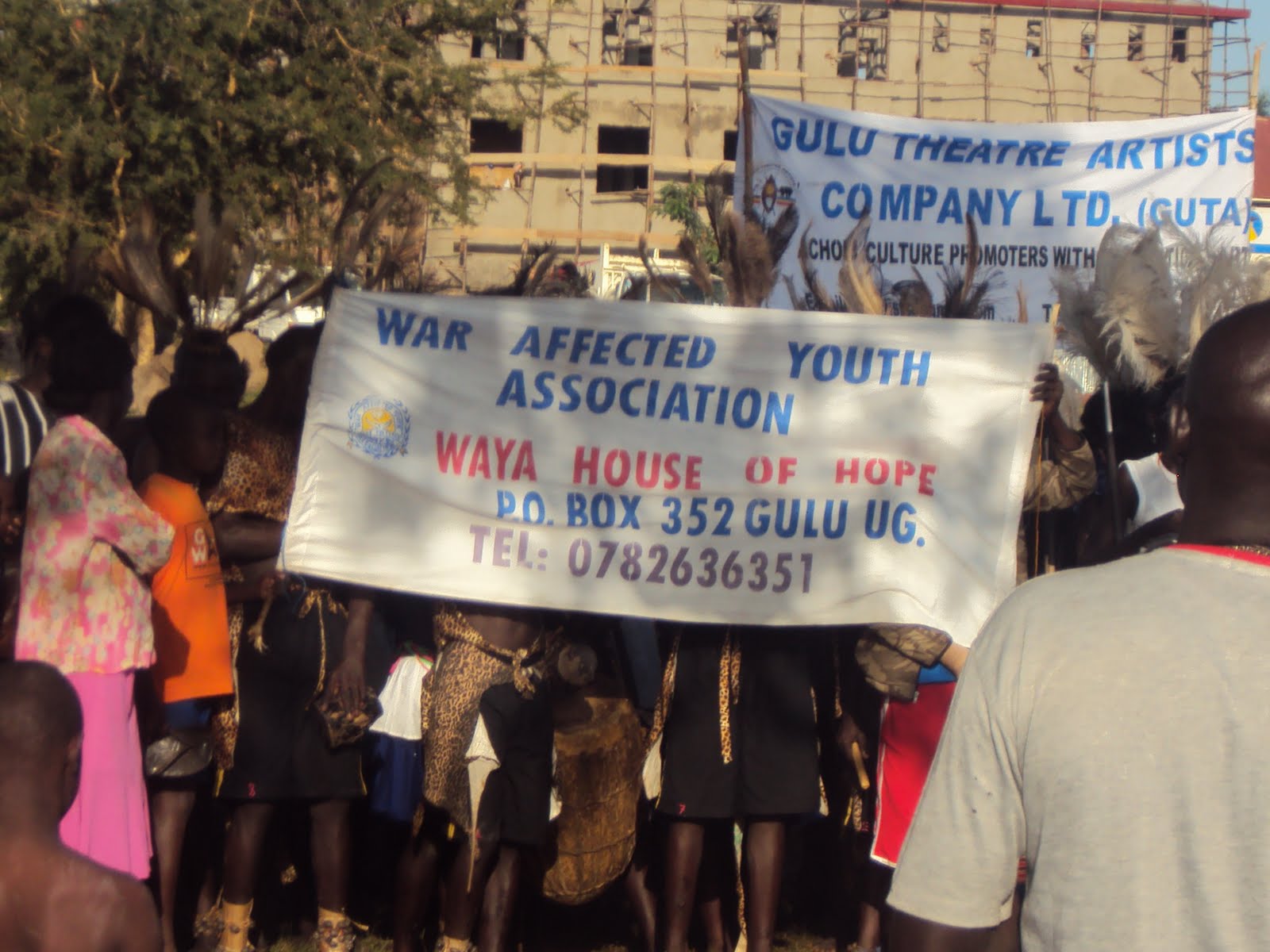
About two weeks ago, I was invited by a friend who works for Gulu Public Primary to witness an Acholi cultural dance festival & … It was absolutely AMAZING! There were about 6-7 groups who performed almost a dozen dances with traditional costumes and instruments.
Dances included:
The Raka-Raka (for Courtship)
The Bwola (for Peace) &
The Otole (Warrior Dance- which was performed solely by elderly Women)
The festival was sponsored by The Watoto Church, Gulu Theatre Artist Company and the War Affected Youth Association.
I left with my heart full !!! Again, I will let the pictures speak for themselves


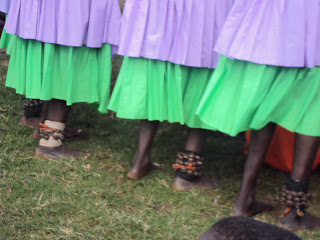


Dances included:
The Raka-Raka (for Courtship)
The Bwola (for Peace) &
The Otole (Warrior Dance- which was performed solely by elderly Women)
The festival was sponsored by The Watoto Church, Gulu Theatre Artist Company and the War Affected Youth Association.
I left with my heart full !!! Again, I will let the pictures speak for themselves



Friday, April 23, 2010
Peace Education in northern Uganda
Many of you who are familiar with my postings know that I am a second year student at the University of Tennessee pursuing research on Peace Education (PE) in northern Uganda. I have been here in Uganda since January 22nd. Recently I changed my departure date from May 17th to July 13th- Giving me almost 3 more months to continue researching … and eating malakwang and sweet potatoes :)
Proud to say that significant progress has been made- Like I’ve said before, I’m learning so much and I’m continuing to learn each and every time I go out into the field. This post is my effort to try and share with you the things I’ve discovered about the current implementation of Peace Education in secondary schools.
Here it goes …
Looking at the educational infrastructure of northern Uganda reveals a system devastated by war. Some of the best teachers and administrators fled the region during the insurgency. Schools in the rural were destroyed and those in the municipality were overcrowded with children from the greater north. Resources, learning materials and basic facilities were in short supply and today they remain insufficient. Around 90% of the Acholi & Langi people were relocate to IDP camps and as many of you know, countless children were abducted.
Now with a state of relative peace in the region I find myself wondering how people are copping with the gaps left in the schools by war. Who is helping to rebuild this sector and how is education being used to prevent a return to conflict? These questions pointed me in the direction of Peace Education. USAID, SPRING (local civil-society organization) and UMECS (United Movement to End Child Soldiering) have initiated a pilot-project that will introduce and incorporate peace education and guidance and counseling in 7 schools: Lira Palwo in Pader, Pabbo Secondary in Amuru, Kitgum Alliance High in Kitgum, Sir Samuel Baker, Sacred Heart Academy, Gulu College and Gulu High in Gulu District as well as Unyama National Teacher’s College.
A report from SPRING highlights the pilot project’s peace education goal: “This is intended to bolster reconciliation and national healing, following decades of armed conflicts in several parts of the country … to build a culture of peace on a systemic basis will begin, starting in schools and emanating into the communities.” SPRING’s director for Peace and Access expressed that she thought this initiative would “help the region avoid future conflicts”
My Findings …
So far I’ve visited Kitgum Alliance, Gulu College, Gulu High and Paboo Secondary in relation to this study. Each giving me a unique look at how this pilot-project is working on the ground- I am still looking to observe some of the peace education activities like drama, dance, debate and the actual class-room discussions, but this must be pursued when the 2nd semester begins in late May.
However, select interviews with staff from SPRING, the Ministry of Education & Sports, teachers, faculty and students of these secondary schools revealed that different schools have different methods of incorporating the new peace education curriculum. Some like Kitgum Alliance put it in the timeslot for teaching every Friday, while Gulu College has a slot in the curriculum everyday in-between subjects like history and physical education.
Whatever way they wish to incorporate it, all the teachers trained in PE follow a teacher’s guide on related topics of gender, human rights, freedom and democracy, social justice, environmental sustainability, vulnerable groups, culture, violence, conflict mitigation and management, development of inner peace, peace itself, and how to relate and socialize peacefully with others around you . Most instructors are firm believers in PE. Many recalled that before the teaching of PE the students did not know how to relate to each other in a “peaceful” manner. Every dispute would somehow erupt in aggression. Now they say that those cases have decreased and even their relationships with their pupils have improved.
Personal Accounts ...
From a PE instructor when asked what they have gained from training and teaching: I have gained … because when before I received this training I used to abuse drugs, like maybe taking alcohol but it has changed my lifestyle and nowadays I don’t take it … they said before you teach somebody, stop somebody from doing something you have to also changed your style …
From a student on how PE has helped her: Helps me to develop … it developed my means to be of help in the community
From a student on if PE was needed in school: Yes, because if there is peace in northern Uganda then we will even study well and our government will also plan well for us
From a teacher on if PE can prevent a return to conflict: You know when we create a culture of peace especially from this generation, the young ones we believe are going to avoid any future occurrence of similar atrocities because they will develop knowing what is suppose to be done as far as peace is concerned, they will know how to prevent violence, they will know how to mediate, they will know how to resolve conflict, so we believe this generation is so lucky that they are going to utilize what is being taught
…
Students are becoming peace actors themselves. In some secondary schools they have become youth counselors in which their peers can come to them for advice first. Although nothing formal has been recorded what’s most exciting to hear is that students take these topics of PE and discuss them with their families. The pilot was just implemented in February, but my hope is that over the student’s first break since engaging in PE the teachers will record and ask the students how they were able to affect their community- adding another dimension to PE
So much more I wish to write about, but for the sake of the few who read my postings let me wrap up!
Students and teachers link peace education directly to having and maintaining a peaceful state in northern Uganda. I’m not sure how practical this is, but the belief is there … and because they see the two as connected and interrelated there is a good chance that this pilot-project, if successful and extended across all of Uganda, will decrease the likelihood of a return to conflict in northern Uganda and will act as a preventative measure for future conflicts in the country.
Me: What does Peace mean to you?
Youth at Kitgum Alliance: Really Freedom
Proud to say that significant progress has been made- Like I’ve said before, I’m learning so much and I’m continuing to learn each and every time I go out into the field. This post is my effort to try and share with you the things I’ve discovered about the current implementation of Peace Education in secondary schools.
Here it goes …
Looking at the educational infrastructure of northern Uganda reveals a system devastated by war. Some of the best teachers and administrators fled the region during the insurgency. Schools in the rural were destroyed and those in the municipality were overcrowded with children from the greater north. Resources, learning materials and basic facilities were in short supply and today they remain insufficient. Around 90% of the Acholi & Langi people were relocate to IDP camps and as many of you know, countless children were abducted.
Now with a state of relative peace in the region I find myself wondering how people are copping with the gaps left in the schools by war. Who is helping to rebuild this sector and how is education being used to prevent a return to conflict? These questions pointed me in the direction of Peace Education. USAID, SPRING (local civil-society organization) and UMECS (United Movement to End Child Soldiering) have initiated a pilot-project that will introduce and incorporate peace education and guidance and counseling in 7 schools: Lira Palwo in Pader, Pabbo Secondary in Amuru, Kitgum Alliance High in Kitgum, Sir Samuel Baker, Sacred Heart Academy, Gulu College and Gulu High in Gulu District as well as Unyama National Teacher’s College.
A report from SPRING highlights the pilot project’s peace education goal: “This is intended to bolster reconciliation and national healing, following decades of armed conflicts in several parts of the country … to build a culture of peace on a systemic basis will begin, starting in schools and emanating into the communities.” SPRING’s director for Peace and Access expressed that she thought this initiative would “help the region avoid future conflicts”
My Findings …
So far I’ve visited Kitgum Alliance, Gulu College, Gulu High and Paboo Secondary in relation to this study. Each giving me a unique look at how this pilot-project is working on the ground- I am still looking to observe some of the peace education activities like drama, dance, debate and the actual class-room discussions, but this must be pursued when the 2nd semester begins in late May.
However, select interviews with staff from SPRING, the Ministry of Education & Sports, teachers, faculty and students of these secondary schools revealed that different schools have different methods of incorporating the new peace education curriculum. Some like Kitgum Alliance put it in the timeslot for teaching every Friday, while Gulu College has a slot in the curriculum everyday in-between subjects like history and physical education.
Whatever way they wish to incorporate it, all the teachers trained in PE follow a teacher’s guide on related topics of gender, human rights, freedom and democracy, social justice, environmental sustainability, vulnerable groups, culture, violence, conflict mitigation and management, development of inner peace, peace itself, and how to relate and socialize peacefully with others around you . Most instructors are firm believers in PE. Many recalled that before the teaching of PE the students did not know how to relate to each other in a “peaceful” manner. Every dispute would somehow erupt in aggression. Now they say that those cases have decreased and even their relationships with their pupils have improved.
Personal Accounts ...
From a PE instructor when asked what they have gained from training and teaching: I have gained … because when before I received this training I used to abuse drugs, like maybe taking alcohol but it has changed my lifestyle and nowadays I don’t take it … they said before you teach somebody, stop somebody from doing something you have to also changed your style …
From a student on how PE has helped her: Helps me to develop … it developed my means to be of help in the community
From a student on if PE was needed in school: Yes, because if there is peace in northern Uganda then we will even study well and our government will also plan well for us
From a teacher on if PE can prevent a return to conflict: You know when we create a culture of peace especially from this generation, the young ones we believe are going to avoid any future occurrence of similar atrocities because they will develop knowing what is suppose to be done as far as peace is concerned, they will know how to prevent violence, they will know how to mediate, they will know how to resolve conflict, so we believe this generation is so lucky that they are going to utilize what is being taught
…
Students are becoming peace actors themselves. In some secondary schools they have become youth counselors in which their peers can come to them for advice first. Although nothing formal has been recorded what’s most exciting to hear is that students take these topics of PE and discuss them with their families. The pilot was just implemented in February, but my hope is that over the student’s first break since engaging in PE the teachers will record and ask the students how they were able to affect their community- adding another dimension to PE
So much more I wish to write about, but for the sake of the few who read my postings let me wrap up!
Students and teachers link peace education directly to having and maintaining a peaceful state in northern Uganda. I’m not sure how practical this is, but the belief is there … and because they see the two as connected and interrelated there is a good chance that this pilot-project, if successful and extended across all of Uganda, will decrease the likelihood of a return to conflict in northern Uganda and will act as a preventative measure for future conflicts in the country.
Me: What does Peace mean to you?
Youth at Kitgum Alliance: Really Freedom
Friday, April 16, 2010
Wa Winye: Listening To The People
So as promised, here is my blog about Music for Peace … And other things :)
MfP is a movement to transform conflict zones in Africa through the power of music. It was started by a good friend and fellow core-Jazz for Justice member Lindsay McClain. She recently graduated from UT in December 2009, but during her undergraduate years she traveled to Uganda five times and eventually designed a major around her work.
Now living in Uganda she works with the Justice and Reconciliation Project. She is also acting as exchange coordinator for MfP. So as her roommate I was enlisted to help! Music for Peace’s goal is to build artistic and cultural exchange between the conflict areas of northern Uganda and Sierra Leone. While attending a conference in Ghana last year she met a Sierra Leonean artist from Freetong Players International … They talked … Got to know each other’s background … brainstormed … and the rest is history!
Now MfP with the support of the Jazz for Justice project (JfJ) is sponsoring a peace music competition here in Kitgum and Gulu during the month of April which will allow one local artist to join Lindsay and northern Ugandan artists Jeff Korondo and Jahria Okwera to Sierra Leone in May (15-23) for the cultural exchange as well as a music festival.
It’s all so exciting! And wonderful to see how people are getting interested in the movement. Lindsay and Jeff Korondo have put a lot of work into this and we are all hoping for its success. If you are back home and would like to donate please visit musicforpeace.wordpress.com ! We are at the half-way mark for donations and we have two events left: A competition TODAY in Gulu and the finale competition next Friday. Please feel free to donate. (instructions are on the site)
… Also let’s not forget my other roommate and JfJ member Erin Cagney, an Anthropology honors student, who has a project of her own in which she is working with Bishop Ochola to turn Acholi traditional folktales into cartoons to distribute to schools. These stories are so important to the culture here and due to the war the tradition of telling them has been all but lost. There will be 30 booklets in all, each containing a different story. The project is in it infancy, but we hope in the next year at least several copies of one book will be published. Then from there we can apply for funding to publish more. The title of the series is “Ododo Na Moni Yoo” translated "This is my story."
Then there's CreatEd … it stands for Creative Education. It is a pilot project started by fellow JfJ core member Dustyn Winder. He will be joining us in May to implement this project in two schools (one rural and one in the municipality) The goal of the project is to promote cultural reinvigoration for northern Ugandan youth through the melding of Acholi artistic traditions with popular culture. And if successful it will be implemented in more schools!
SO A LOT is GOING ON! … And other projects are in the works too :)
Just thought I would share with the folks back home all the awesomeness that is happening here. All the good things being pursued by young students- And the best thing about it is the fact that Ugandans are ALL involved in these projects. Their voices are not pushed into the background. I have seen this happened before- In fact it is happening right now with the LRA Disarmament Bill and Northern Uganda Recovery Act being pushed through senate right now. We all support recovery in the north and an end to the LRA insurgency, but many of my friends and I do not support the bill’s provision for a “military solution”
Living here has allowed me to see that the people of northern Uganda do not support the decision for a military solution either. And rather than the groups back home listening to that sentiment, they have turned a deaf ear to do what they think is best. Three rather influential organizations: Resolve Uganda, The Enough Project and Invisible Children have banded together using their thousands of followers to push for this bill. These organizations aren’t “bad” but they do have the tendency to either misrepresent the situation in northern Uganda or do things like now push for a solution that the Acholi and Langi people do not want. Those of us in Jazz for Justice do not wish the bill to fail, but we cannot support it under these conditions.
So I challenge everyone to research and look more closely at initiatives that you think are “helping people” and decide for yourself whether it is actually benefiting the people on the ground or is it making you feel good as a person. Be informed- Educate yourself- And you can be that change agent- the person that can find a way to do it better. Humanitarianism is not black and white. It has areas of gray so it’s important to listen. To listen to your instinct and more importantly to listen to the people-
I’m sure with time I will create my own initiative like my JfJ friends. But for right I’m helping support their projects. In the meantime I will be here, listening to the people of northern Uganda with an open mind and heart.
Wa winye
Or “Let us Agree” … And I hope that somehow everyone can agree so that we can move forward together
MfP is a movement to transform conflict zones in Africa through the power of music. It was started by a good friend and fellow core-Jazz for Justice member Lindsay McClain. She recently graduated from UT in December 2009, but during her undergraduate years she traveled to Uganda five times and eventually designed a major around her work.
Now living in Uganda she works with the Justice and Reconciliation Project. She is also acting as exchange coordinator for MfP. So as her roommate I was enlisted to help! Music for Peace’s goal is to build artistic and cultural exchange between the conflict areas of northern Uganda and Sierra Leone. While attending a conference in Ghana last year she met a Sierra Leonean artist from Freetong Players International … They talked … Got to know each other’s background … brainstormed … and the rest is history!
Now MfP with the support of the Jazz for Justice project (JfJ) is sponsoring a peace music competition here in Kitgum and Gulu during the month of April which will allow one local artist to join Lindsay and northern Ugandan artists Jeff Korondo and Jahria Okwera to Sierra Leone in May (15-23) for the cultural exchange as well as a music festival.
It’s all so exciting! And wonderful to see how people are getting interested in the movement. Lindsay and Jeff Korondo have put a lot of work into this and we are all hoping for its success. If you are back home and would like to donate please visit musicforpeace.wordpress.com ! We are at the half-way mark for donations and we have two events left: A competition TODAY in Gulu and the finale competition next Friday. Please feel free to donate. (instructions are on the site)
… Also let’s not forget my other roommate and JfJ member Erin Cagney, an Anthropology honors student, who has a project of her own in which she is working with Bishop Ochola to turn Acholi traditional folktales into cartoons to distribute to schools. These stories are so important to the culture here and due to the war the tradition of telling them has been all but lost. There will be 30 booklets in all, each containing a different story. The project is in it infancy, but we hope in the next year at least several copies of one book will be published. Then from there we can apply for funding to publish more. The title of the series is “Ododo Na Moni Yoo” translated "This is my story."
Then there's CreatEd … it stands for Creative Education. It is a pilot project started by fellow JfJ core member Dustyn Winder. He will be joining us in May to implement this project in two schools (one rural and one in the municipality) The goal of the project is to promote cultural reinvigoration for northern Ugandan youth through the melding of Acholi artistic traditions with popular culture. And if successful it will be implemented in more schools!
SO A LOT is GOING ON! … And other projects are in the works too :)
Just thought I would share with the folks back home all the awesomeness that is happening here. All the good things being pursued by young students- And the best thing about it is the fact that Ugandans are ALL involved in these projects. Their voices are not pushed into the background. I have seen this happened before- In fact it is happening right now with the LRA Disarmament Bill and Northern Uganda Recovery Act being pushed through senate right now. We all support recovery in the north and an end to the LRA insurgency, but many of my friends and I do not support the bill’s provision for a “military solution”
Living here has allowed me to see that the people of northern Uganda do not support the decision for a military solution either. And rather than the groups back home listening to that sentiment, they have turned a deaf ear to do what they think is best. Three rather influential organizations: Resolve Uganda, The Enough Project and Invisible Children have banded together using their thousands of followers to push for this bill. These organizations aren’t “bad” but they do have the tendency to either misrepresent the situation in northern Uganda or do things like now push for a solution that the Acholi and Langi people do not want. Those of us in Jazz for Justice do not wish the bill to fail, but we cannot support it under these conditions.
So I challenge everyone to research and look more closely at initiatives that you think are “helping people” and decide for yourself whether it is actually benefiting the people on the ground or is it making you feel good as a person. Be informed- Educate yourself- And you can be that change agent- the person that can find a way to do it better. Humanitarianism is not black and white. It has areas of gray so it’s important to listen. To listen to your instinct and more importantly to listen to the people-
I’m sure with time I will create my own initiative like my JfJ friends. But for right I’m helping support their projects. In the meantime I will be here, listening to the people of northern Uganda with an open mind and heart.
Wa winye
Or “Let us Agree” … And I hope that somehow everyone can agree so that we can move forward together
Saturday, April 3, 2010
Now She Is Rising ... Still
It’s morning … and I’ve just gotten myself out of bed- Actually, it’s almost noon … The girls are still sleeping. I’m not sure why I’m up now because we had such a busy time last night helping Lindsay and Jeff Korando with the launch of Music for Peace (musicforpeace.wordpress.com). BUT I will save that event for my next blog …
Last night, we arrived around 8PM to help set up and Erin and I worked the door until about 3AM. We made it home close to 4AM (sigh) … just thinking about it makes me want to go jump back in bed … but I’m up … my body would not let me lie and my mind woke up racing with thoughts between here and nowhere. You know that place. Where despite all your attempts to go back to sleep you return to every now and again. A place of endless random thoughts of life and love, growth and stillness, confusion and understanding –
So despite my efforts I woke up in that place and this time instead of fighting to return to my sleep I rose to greet the bright African sun, the noisy children outside, the cool breeze, the neighbors’ crying babies and the stillness of our house
I rose this morning and yet I feel as if I am still rising. That is, to new heights— of learning, loving- joy and truth in both its forms of ugly and beauty to somehow find myself and God in unfamiliar places.
I know that I am not the same as I was before I came. I’ve gained so much.
This trip … this journey to Uganda has allowed me to experience a culture other than my own. Where on some days I feel detached and on others I fit right in…
At this moment, this exact second I’m no longer worried academically as I was as a freshman. Yes, I still second guess myself- sometimes I wonder if I can live up to all the titles I’ve acquired- A College Scholar, Baker Scholar, core-member of Jazz for Justice and Amnesty International UTK … the list goes on and on.
So far, I’ve been able to keep it together, but I’ve always worried people would discover that I’m not as great as those titles describe me to be … that I’m not some extraordinary student, that I’m a little black girl from the inner-city who happened to escape her surroundings of frequently replayed scenarios of dreams deferred, lives broken and violent encounters.
But Uganda, she has allowed me to take that and push it aside. I’m not worried anymore. I know failure and triumph go hand and hand so I embrace whatever comes to me and especially what does not
Living and studying in Gulu with the Acholi people has allowed me to see the resilience in them. They are deeply concerned about their future. They are tired and weary from war and heart-broken over destroyed cultural practices, traditions and infrastructures … but they will not give up. They believe in the power of cultural revival, the healing in reconciliation and the importance of education for rebuilding their lives and society.
And I … I believe with them. Two-decades of war devastated this region. The LRA and its leader Joseph Kony are currently in other regions in Sudan, DRC (the Congo) and CAR (Central African Republic) bordering northern Uganda reeking havoc and destroying lives there. Psychosocial trauma here is a growing problem, many people are still in the desolate IDP camps and poverty is abundant.
Despite all of this and then some I rose this morning to noisy children laughing, singing and playing, to busy mothers and fathers preparing for the Easter celebration tomorrow, to the stillness of our house versus the outside world … Northern Uganda is rising. She is rising from conflict with strength and conviction in an effort to move forward to just a sense of normalcy and familiarity with the environment she has known for centuries.
And I am rising with her, intertwining our hopes and dreams as we go ...
This blog is dedicated to Mrs. Jennifer Alejo. My 12th grade English Teacher who I affectionately call Mama Mcgawl- Mama, you reach down in all of your students to show them a part of themselves that was hidden. You reached into me and showed me that I could be more than what the world told me I could be. You pushed me academically when no one else would, you relentlessly encouraged me and you let me go with all confidence into the world to defy what Maya Angelou calls “the odds and gods” to "sing my song." Thank you.
Last night, we arrived around 8PM to help set up and Erin and I worked the door until about 3AM. We made it home close to 4AM (sigh) … just thinking about it makes me want to go jump back in bed … but I’m up … my body would not let me lie and my mind woke up racing with thoughts between here and nowhere. You know that place. Where despite all your attempts to go back to sleep you return to every now and again. A place of endless random thoughts of life and love, growth and stillness, confusion and understanding –
So despite my efforts I woke up in that place and this time instead of fighting to return to my sleep I rose to greet the bright African sun, the noisy children outside, the cool breeze, the neighbors’ crying babies and the stillness of our house
I rose this morning and yet I feel as if I am still rising. That is, to new heights— of learning, loving- joy and truth in both its forms of ugly and beauty to somehow find myself and God in unfamiliar places.
I know that I am not the same as I was before I came. I’ve gained so much.
This trip … this journey to Uganda has allowed me to experience a culture other than my own. Where on some days I feel detached and on others I fit right in…
At this moment, this exact second I’m no longer worried academically as I was as a freshman. Yes, I still second guess myself- sometimes I wonder if I can live up to all the titles I’ve acquired- A College Scholar, Baker Scholar, core-member of Jazz for Justice and Amnesty International UTK … the list goes on and on.
So far, I’ve been able to keep it together, but I’ve always worried people would discover that I’m not as great as those titles describe me to be … that I’m not some extraordinary student, that I’m a little black girl from the inner-city who happened to escape her surroundings of frequently replayed scenarios of dreams deferred, lives broken and violent encounters.
But Uganda, she has allowed me to take that and push it aside. I’m not worried anymore. I know failure and triumph go hand and hand so I embrace whatever comes to me and especially what does not
Living and studying in Gulu with the Acholi people has allowed me to see the resilience in them. They are deeply concerned about their future. They are tired and weary from war and heart-broken over destroyed cultural practices, traditions and infrastructures … but they will not give up. They believe in the power of cultural revival, the healing in reconciliation and the importance of education for rebuilding their lives and society.
And I … I believe with them. Two-decades of war devastated this region. The LRA and its leader Joseph Kony are currently in other regions in Sudan, DRC (the Congo) and CAR (Central African Republic) bordering northern Uganda reeking havoc and destroying lives there. Psychosocial trauma here is a growing problem, many people are still in the desolate IDP camps and poverty is abundant.
Despite all of this and then some I rose this morning to noisy children laughing, singing and playing, to busy mothers and fathers preparing for the Easter celebration tomorrow, to the stillness of our house versus the outside world … Northern Uganda is rising. She is rising from conflict with strength and conviction in an effort to move forward to just a sense of normalcy and familiarity with the environment she has known for centuries.
And I am rising with her, intertwining our hopes and dreams as we go ...
This blog is dedicated to Mrs. Jennifer Alejo. My 12th grade English Teacher who I affectionately call Mama Mcgawl- Mama, you reach down in all of your students to show them a part of themselves that was hidden. You reached into me and showed me that I could be more than what the world told me I could be. You pushed me academically when no one else would, you relentlessly encouraged me and you let me go with all confidence into the world to defy what Maya Angelou calls “the odds and gods” to "sing my song." Thank you.
Subscribe to:
Posts (Atom)